Showing posts with label muppets. Show all posts

Friday, November 21, 2014

Recommended Reading for 11/21: The Musical Monsters of Turkey Hollow


I think it's pretty safe to say that most people who grew up in the 70s and 80s have a love of The Muppets and many of the other creations of visionary Jim Henson. And no creator in comics has worked with the worlds of Henson more than Roger Langridge, whose Muppet Show Comic Book was one of my first recommended readings. So, if there was one creator who would adapt a lost Henson Thanksgiving special, it would have to be Langridge, and so it was that Archaia Entertainment, publishers of various other Henson adaptations, and their parent company, BOOM Studios!, who initially published Langridge's Muppets comics and his series, Snarked!, got Langridge to adapt The Musical Monsters of Turkey Hollow.

Originally written by Henson and his collaborator Jerry Juhl in 1968, Musical Monsters has a feeling similar to the Henson holiday specials of the 80s such as Emmet Otter's Jug Band Christmas; you won't see Kermit or the other familiar Muppets, but you'll absolutely know it's a Henson story. The themes that it explores are friendship and family, both themes that are central to Muppet stories.

The plot of Musical Monsters has that simple charm of all the best Henson stories. Timmy Henderson lives with his big sister, Ann, and his aunt, Clytemnestra, on land outside of the town of Turkey Hollow, where the turkeys vastly outnumber the people. They're a little different, a little quirky, and their neighbor, Mr. Sump, wants their land. Timmy is learning to play the guitar, and when he goes out to practice in the woods, he finds the Musical Monsters, creatures from space, who make harmony with his playing and helps him find his rhythm. He befriends the Monsters, they play music and have fun, and soon they they befriend Timmy's whole family. But Mr. Sump finds out about the Monsters, and soon Timmy must help save his new friends.

The characters in this story are simple characters that can be summed up easily. Timmy is a good kid, Ann is his sweet big sister, Aunt Cly is the quirky hippy lady, Mr. Sump is a big jerk, and the local sheriff, Grover Cowley, is a nice guy with a crush of Cly. And for a story like this, that works perfectly. It's a holiday story about Musical Monsters, and so a simple plot with simple characters works perfectly. They all have dimension and motivation, Henson and Juhl were too good as writers to make their characters two dimensional, but the story doesn't require haunted backstories and long monologues. It's just a holiday story, one about making friends no matter their shape or size.

The Monsters themselves don't speak, but each interact through making a specific sound. Anyone familiar with The Muppet Show can picture this kind of Muppet creation, as they would often appear as one off skit creatures. It's here that the graphic novel format really helps the Musical Monsters. Muppets can be wonderfully expressive, but as simple puppets, they only have so much range of facial and physical expression. Langridge is able to give the Monsters so much personality, even though they don't speak, just by look and body language. They're all well designed, with Langridge expanding on the initial designs by Henson to make them full creatures, since most Muppets don't show all their appendages after all. There are test images of the original Muppets, along with Henson's daughters, and you can absolutely see that, while Langridge expanded the Monsters, he stayed very true to Henson's original intentions.


Now, one of the problems with telling a story that has so much music in it, as most Muppet stories do, in this kind of format is that, well, you can't hear the music. In his afterword, Langridge himself admits that music and comics go together like, "chalk and peanut butter," but he knew he needed to do something, since music is central to the plot of the story. Through the wonders of the creativity of Langridge and colorist Ian Herring, music is symbolized through color. Notes of different colors dot the pages as Ann sings her song, and as the Musical Monsters harmonize with Timmy whole pages are covered in whirls of gorgeous hews, all bright, warm colors that seem to send joy from the page. I found myself making little tunes to each of the sings and pitches and tones to the Monsters sounds.

Oh, one very cool thing to look out for when you check out the book: at one point in the story, the Musical Monsters sneak into Timmy's bedroom and he wakes up to see them standing at the foot of the bed. The internal back cover and the last page are a two page spread that show the shot from the other angle, and it shows the Muppeteers performing the parts, including Henson, and Juhl holding some script pages. It's one of those charming pages and ideas that makes Langridge such a brilliant creator and something that brought a big smile to my face.

So, that's The Musical Monsters of Turkey Hollow. I was talking to a customer this week at Dewey's, and they asked if this would be good to read to a kid, and that got me to think this would be a perfect book to share with your kids. I can see making up tunes, making funny sounds, and doing every silly thing to make a kid smile throughout the story. And those smiles are the greatest tribute that a man like Jim Henson could have asked for.

Even though there will be at least a couple posts next week, I just wanted to thank everyone reading this for taking the time to read my little blog. Have a safe and happy holiday weekend.

The Musical Monsters of Turkey Hollow is available at better comic shops, as well as bookstores.


Monday, October 8, 2012

Reviews of Comics from Wednesday 10/3


Detective Comics #13
Story: John Layman
Art: Jason Fabok & Andy Clarke

Detective Comics has had a rocky time since the New 52 started. It started out solid, but quickly meandered, with new villains who weren't fleshed out and a love interest who was equally a cipher. I'm happy to report that John Layman's first issue puts the book right on track. The Penguin has gotten quite a bit of use in the past year, but I really enjoyed how he is portrayed here. Penguin's jealousy over being passed over and look on by Gotham as a crook has been a part of his character for years, but Layman puts that front and center. Penguin's plan to make his own name bigger than Bruce Wayne's, and to take out Wayne in the process, and how he plans to keep Batman busy, are clever; this isn't a waddling Burgess Meredith Penguin, but one who would fit in well in the Nolan universe. I also enjoyed Layman's take on Batman. He's clever and is able to think one step ahead of Penguin; the Batman in the book is suited for it, as he is a detective, putting evidence together to beat his foes. He also has levels, thinking about donating to charities that deal with the injuries he inflicts on he enemies and caring about his mother's memories. The backup features focuses on Ogilvy, Penguin's new right hand man, going on the caper that facilitates Penguin's plot in the main story with a new hire. It's a little crime story, abut what it's like to be a rank and file crook in Gotham; the flipside to Gotham Central. Jason Fabok's art has improved leaps and bounds from the first time I saw his work on the first volume of Batman: The Dark Knight; he's developing his own style separate from David Finch, who his early work strongly resembled.


Legends of the Dark Knight #1
Story: various
Art: various

The original Legends of the Dark Knight series was the first series I collected starting with the first issue, and so I have a soft spot for the series, and was curious to see what this new anthology of digital first stories would bring. The first issue had three stories, each of which was an excellent Batman short. The standout was "The Butler Did It," from Lost creator Damon Lindelof and Jeff Lemire, who I have encountered mostly as a writer. A story of Batman's early years, it presents a cocky young Bruce being put into his place by Alfred. It's a dark little story, but one that ends reminding us of the bond between Bruce and Alfred, and that everything Alfred does in the end is for Bruce's good. "All of the Above" is a Batman versus Amazo story on the JLA watchtower. It's one of those stories that shows that Bruce's mind is his greatest weapon, one that could allow him to stop any of the more traditionally powerful members, and its J.G. Jones art is stunning. The final piece, "The Crime Never Committed," comes from Star Wars scribe Tom Taylor and Secret Six & Earth 2 penciller Nicola Scott. The story of Batman preventing a desperate man from committing a crime is tight and clever, another good story of Batman as detective. I love a good short comic story, and I hope each issue can provide just as many good shorts.


Muppets #4
Story & Art: Roger Langridge

And this is it: the final Muppets story from Roger Langridge. The issue is the perfect coda to everything Langridge has done with the Muppets, mixing classic bits with the warm heart that he puts into his work and fits so beautifully with the Muppets. It's Christmas at the Muppets Theater, and Miss Piggy wants a kiss and a ring from Kermit, and is trying to find him the best Christmas present possible. Gonzo's latest stunt has destroyed the Theater's new fridge. And a wild Christmas Pudding is on the loose. Mix that in with a Pigs in Space and a Swedish Chef, and you get some perfect Muppet chaos. I am going to miss Langridge in these characters, and with the end of Snarked as well, I just have to keep my ear to the ground for whatever is next from him. I know I won't be disappointed.


Uncanny X-Men #19
Story: Kieron Gillen 
Art: Dale Eaglesham

In the same week we get the end of Avengers Vs. X-Men, an issue I had a lot of problems with, we get this gem, "The Passion of Scott Summers." The issue is a travel through Scott's mind, covering the same period of time as the last two issues of Avengers Vs. X-Men. it's chilling to watch Scott fight with the Phoenix Force, to try his best to stay master of it, and fail so utterly. Memories of his life, of the times the Phoenix has effected him, dance through his mind as he fights the assembled Avengers and X-Men. He's not a completely mad monster, but a man who was trying to do what he truly believed was best and has been corrupted by something outside himself; the road to Scott's hell has been paved with good intentions. In the end it is his contact with the Phoenix Force, and with apparently Jean Grey's spirit, plus his own pain, that stops him long enough for Hope to finally put a stop to all this. In the end, when he finds out that new mutants are being born, he feels like he has done what was right, that the ends have justified the means. That is not to say he does not have regrets; the look of pain on his face as he realizes he has killed Charles Xavier is poignant. But he has done what he has set out to do, and he will take responsibility for the end results. Dale Eaglesham does a tremendous job mixing the chaos of the Phoenix battle with Scott's more pleasant memories. The final scene, between Scott and the Beast is written beautifully, but Eaglesham puts the right touches to it to really make it pop off the page. My final note on this issue, and the whole event, is something I'm borrowing from Comics Alliance. I hope someone makes these shirts, because I'll be first in line to buy them.


Monday, September 10, 2012

Reviews of Comics from Wednesday 9/5


Detective Comics #0
Story: Greeg Hurwitz/James Tynion IV
Art: Tony Daniel & Pere Perez/ Henrik Jonsson

The first of the DC Zero Month Batman titles was a pleasant surprise. Bruce Wayne's time away, training to be Batman, is a period that has actually had very little exposure in comics. Batman Begins spends a good amount of time with it, and one of the best episodes of Batman: The Animated Series, "Night of the Ninja," also features Bruce learning martial arts skills. But in the comics, more time has been spent with Henri Ducard and Harvey Harris, the men who taught Bruce the manhunting and detective skills, than with his martial arts history. The issue is about Bruce taking his final step, with his final master, the cold and unrelenting Shihan Matsuda. Much of the story works like any martial arts training montage you've ever seen, with Matsuda training Bruce and insulting him when he fails, with Matsuda's wife soothing Bruce's aches and offering comfort where Matsuda offers scorn. But part of Matsuda's training is the denial of emotion and connection, and we see part of where Bruce's inability to connect with others comes from. The ending of the story shows Bruce that betrayal is always around the corner, and that trust can get you killed, lessons that I think he struggles with to this day. While I enjoyed the main story, the back-up, featuring Alfred during Bruce's years away, was the real gem. Having established Bruce's mother, Martha, as part of the Kane family, who are still alive since Batwoman is probably related to them as well, this story explains why young Bruce never went to live with his relatives. But more important than a continuity fix, the story showcases Alfred's love and dedication to the Wayne family, and to Bruce. Alfred is a constant presence in Bruce's life, and I enjoy a story that really puts the focus on him, reminding us that he is more than just Bruce's gentleman's gentleman, but his friend and family. The two stories work well off each other, with the Matsuda's as Bruce's surrogate family filled with pain, and Alfred, who shows nothing but unconditional love. I hope that the remaining issues exploring the revised origin of Batman in the New 52 are of a similar quality; it will lay a nice groundwork for new readers to understand Batman.


Fairest #7
Story: Matthews Sturges
Art: Shawn McManus

The first arc of the Fables spin-off Fairest was a fun little yarn that put some pieces that had been off the table back into play, and introduced a couple fun new characters. This issue, on the other hand, take a couple of the existing pieces and shines a completely new light on them. Set in the 40s, Beast is out of Fabletown, home in exile of fairy tale characters, on a quest to track down and capture the Lamia, an ancient Greek snakewoman who is killing men, while trying to stay one step ahead of St. George, the legendary dragon slayer, who wants to kill the monster. Told as a letter from Beast to his wife, Beauty, we see Beast working the case, following clues in a classic gumshoe tale, to a bloody confrontation between all the characters. Beast is a character who has been part of Fables since issue one, but has never really had much of a spotlight, and it's odd to see that spotlight in a book geared towards the female Fables cast. There's a scene at the end of the issue between Beast and Bigby Wolf, the lycanthropic Big Bad Wolf who serves as Fabletown's sheriff, that begins to explain some of the animosity that regular readers of the Fables universe have seen in the past. The ending is a major twist, one that readers could figure out if they read the issue carefully, and one that completely shakes up the status quo for some of the regular characters in the series. I'm hoping to see the revelation played out in the course of upcoming stories in this title or the main book, but the final page switches genres beautifully, not working as a noir, but as the perfect cap to a thriller, with Beast again faced with the choices he has made before, and wondering what he will have to do if things come to a head again. It's a great ending, full of possibilities for stories, and since stories rest at the center of Fables, there is no better ending.


The Muppets #3
Story & Art: Roger Langridge

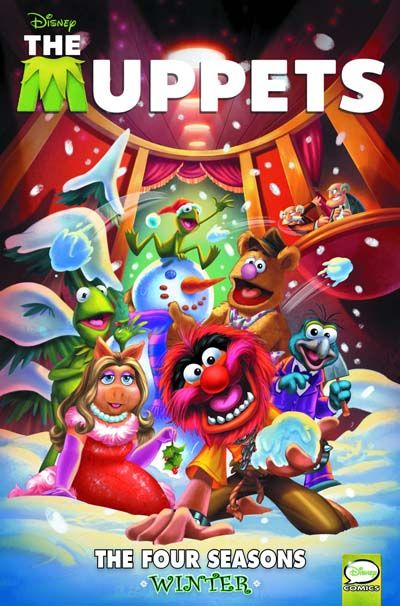
This is the penultimate issue of The Muppets by Roger Langridge, and his deft handling of these classic characters is going to be sorely missed when it's done. There are few comics that are so full of charm and whimsy as a Langridge Muppets. This issue, the Fall issue of "The Four Seasons," focuses on Pops, the Muppet Theatre's doorman. It seems Pops has reached the age where the stage doorman's union makes one retire, and so Pops must train his replacement, his nephew. While there's a hilarious scene as Pops's nephew tries to gently but firmly tell a comedian who is seeking and audition that he isn't welcome, the majority of the issue's comedy is based around the rest of the gang trying to find a way to get Pops to stay on, without letting Kermit, the straight shooter, know. Gonzo comes up with an elaborate scam, that involves finding a birth certificate, but it seems to only member of the crew who has one is Miss :Piggy, who has lost it. Scooter is also taking a collection to get a special plaque made for Pops, and when it comes, it doesn't exactly say what Scooter has intended. As with all issues of a Langridge comic, there's a lot that's going on here, if you couldn't tell be my little synopsis, but it never feels rushed or cramped. As I've said before about any Langridge Muppets story, what Langridge really captures is the heart of these characters, created by the late, great Jim Henson with such love. This crazy band of misfits really care about each other, and Langridge builds his stories around that family relationship, and that's what has always made a great Muppets story.


Near Death #11
Story: Jay Faerber
Art: Simone Guglielmini

Another of my favorite Image series goes away. After the end of Reed Gunther broke my heart, the "season finale" of Near Death stomps the pieces to dust. Markham, the hitman who has found a conscience of sorts after his near death experience, must protect Novak, his former boss, from Robert Knox, the FBI agent who has hunted Novak and who suffered a brain injury removing his conscience. Now Know will kill anyone who gets in his way to get to Novak. Markham continues to struggle with his pledge to not take a life, but this time the life he wants to take is that of the person he's protecting, and Novak continues to goad him about coming back to work for him. The issue is a perfect ending for the story that Jay Faerber has been telling about Markham, and if this is the last we ever see of him, I'll be satisfied, if not happy. Markham cotinues to make choices, and in the end he does the right thing despite what it might mean for him. Markham, who at the beginning of the series had little to no sense of the value of others, now makes a purely selfless choice. The people who Markham has protected over the course of the series come in to help him in the end, and show that the "good guys" have at least a grudging respect for this bad guy trying to turn good. The final back-up, "Struck," from Ed Brisson's Murder Room series is a wonderful short noir, like the rest, fitting tonally well with the book's lead story. I do hope to see more of Markham before too long, but at least I'll have Faerber's new noir mini, Point of Impact, starting next month. Check it out with me, huh?


New Crusaders: Rise of the Heroes #1
Story: Ian Flynn
Art: Ben Bates

I have a real soft spot for the Red Circle heroes, the super heroes created in the 30s and 40s by the company that would one day become Archie Comics. I first discovered them when DC had the rights to the characters in the 90s for their !mpact line (yes, it was the 90s and punctuation could be a letter), and enjoyed them in their appearances in Archie's Weird Mysteries. I wasn't as big a fan of DC's other attempt with the license a couple years back, but it produced a few good comics too, so I can't say too much against it. This first issue introduces us to the town of Red Circle, where it seems most of the original Crusaders have retired to. The retired heroes are having an annual picnic, with their families and proteges, when one of their old enemies attacks, and one hero, the Shield, grabs the kids while the heroes fight. By the end of the issue, it seems the parents have been defeated and killed, leaving only the Shield and the kids to stop the returned villain. The set-up has been done before, with the young inexperienced legacy heroes trained by the one grizzled veteran (it was the foundation for much of Geoff Johns's JSA work, and for Marvel's Secret Warriors), but this issue is very much an all ages story. There's action and pathos, but a distinct lack of the gore that we see in a lot of modern super hero comics. There's not a ton of exposition, so if you don't know the Red Circle characters well, you might not get a lot of what the parents are up to, but the New Crusaders, the kids, are the focus of the series, and this getting to know them as characters is what is really important. With a team of seven, and six of them new completely new, you know you will only get this in broad strokes, but there's still a good amount that happens; I don't feel a lot of decompression here. I'm looking forward to seeing more time spent with the kids as they learn about their parents' histories, and the powers that they'll all be receiving, judging by the cover anyway. If you feel like reading a superhero comic that hearkens back to a simpler time, but still keeps some of the sensibilities of more modern comics, this is a book worth reading.


Smallville Season 11 #5
Story: Bryan Q. Miller
Art: Chris Cross

Smallville was a guilty pleasure TV show of mine for the last few seasons, when they decided that their real audience was fanboys like me, who wanted to see DC heroes on screen, and who didn't care about the will/they won't they relationship between Clark Kent and Lana Lang. I didn't think I'd be particularly interested in getting a comic following up the series, but then they decided to bring in Batman, and, well, you know me... The issue is quite good. Bryan Q. Miller, the writer of the series, actually worked on Smallville on TV, but is best known in comics circles as working on the late, lamented Stephanie Brown Batgirl series, and his mix of action and comedy is evident here. His Nightwing, who is Barbara Gordon, was originally rumored (confirmed?) to be Stephanie before decisions from the powers that be changed it, and she has the same strong, sassy attitude that his Stephanie did. He has a good handle on Batman, and how he thinks; his scene with Lex Luthor could have been in any mainstream DC title and worked just as well. It's interesting to see two early Batman stories from very different universes in one week, and how they contrast: while the Batman in this issue is not a lightweight, he seems lighter than the version in Detective, probably due to the influence of Nightwing. This is a Superman comic, and I should probably talk about Superman a little. I like Miller's Superman, who is closer to the pre-New 52 Superman, very earnest, very boy scouty, missing the anger I see in his current incarnation. But the thing about the Superman parts of the story I liked most were the interactions between Clark and Lois Lane. In this universe, Lois and Clark are a couple, and seeing this, plus rereading some pre-Flashpoint stories, has really made me miss Lois and Clark as a couple. I really only knew them in the comics as a couple, and seeing them again here, they had such a wonderful rapport, one that humanizes Superman. I understand Silver Age fans who never got behind the relationship, but for me, it's a part of the character I miss even more than the red shorts.

Monday, August 6, 2012

Reviews of Comics from Wednesday 8/1


The Boys #69
Story: Garth Ennis
Art: Russ Braun

When Garth Ennis is wrapping up a series or a run, you know it, because the body count just gets higher and higher. The new issue of The Boys moves us closer and closer to the inescapable conclusion of the series. I know I believed that the series was heading towards the final confrontation between Billy Butcher and the Homelander for most of the series. But when that confrontation happened at the end of the penultimate arc, I knew Ennis had something else up his sleeve. And then I realized something, something this issue makes more clear: The Boys has never been Butcher's story. It's been Wee Hughie's. And so the coming storm, the confrontation between Hughie and Butcher, is really the trajectory we've been on all along. Hughie proves this issue that he's probably more clever than many have given him credit for, but is he any braver? Aside from Hughie, we spend some time with The Frenchman and The Female. While Frenchie is a character steeped in absurdism, there have been plenty of moments in the series that flesh him out as a character, and many of those are in his tender, almost paternal, relationship with The Female. This issue gives us plenty of those, with an introspective Frenchie wondering if what he has done has really benefited The Female. Russ Braun does a fabulous job of giving us The Female's thoughts on this, since she is as silent as ever. Three issues to go until the end of the series, now. Let's see what Ennis has in store for us.


Daredevil #16
Story: Mark Waid
Art: Chris Samnee
With his time in Latveria having left Daredevil in complete sensory deprivation, this issue sees some of the rest of the superhero community attempting to restore him. While Iron Man and Dr. Strange are involved, the main hero involved is Giant Man, Hank Pym. Pym is a problematic character, to say the least; he could save the world a hundred times over, but he would always be remembered as the guy who hit his wife. This issue does something interesting, as it draws parallels between Pym's own battles with sanity and stability and those of Daredevil. Samnee continues blowing me away with the visuals on the book, especially during Pym's battle with nanites in the journey to the center of Matt Murdock's brain. The issue's ending, with the falling out between Matt and his best friend and partner, Foggy Nelson, is a major event for the series. Whether Matt has really been suffering further mental complications, or if he's being set up, will he and Foggy be able to reconcile? Foggy has always been there for Matt, and when he hasn't been around, things tend to go poorly for Matt. Waid's run on Daredevil has been his best work in years, and I can't wait to see what new twist he has in store.


The Muppets: The Four Seasons #2
Story and Art: Roger Langridge

The second issue of Langridge's final Muppets story, "The Four Seasons," is primarily a Fozzie Bear story. When I was a little kid, Fozzie was my favorite Muppet. I found him hilarious. I don't think I realized that he was supposed to be not that funny, and thus I loved him, and I still do. Fozzie gets invited to spend the summer with another theatre troupe, one that could be his big break, and he heads off to take his chance. Meanwhile, the rest of the Muppet crew is doing a summer show at the beach. Of course, being this is the Muppet Theatre, things go horribly awry, with a freak summer snowstorm more or less devastating their plans. Fozzie, meanwhile, sees this other troupe and talks to their resident comic, who has gotten his big break and is leaving, and realizes something important about himself. No reader would have expected the issue to end any way than it did, with Fozzie back with the Muppets, but the ending says somethint beautiful about friendship, something that has always been at the core of the Muppets, and about being who you are and doing what you love because you love it, and not because you think it's the way to something better.

Monday, July 9, 2012

Reviews of Comics from Wednesday 7/4


Animal Man #11
Story: Jeff Lemiere
Art: Steve Pugh

Animal Man has been one of the very pleasant surprises of the New 52 for me. I enjoyed Grant Morrison's run on the character back in the day, and his appearances in 52, but Animal Man has never been a character high on my radar. But this new series has been an excellent blend of horror and superhero tropes, in the same way its sister title, Swamp Thing, has been. As we approach the crossover between the two titles, Buddy Baker returns from the world of The Red (the world of animal spirits where de draws his power), with some altered powers and a serious grudge against the creatures of The Rot. Buddy is one of only a couple heroes who are married in the New 52, and his family ties have always been an important aspect of the character. Him demanding to come back to life to save his family from the thing that had possessed his abandoned body is perfectly in character, and shows the depth of Buddy's love. The scene where he returns, where he morphs his body slowly from the most primitive life form to the most complex is well written, and Steve Pugh does a beautiful job in using each of the higher creatures with a humanity in its eyes that shows that Buddy is there looking to get out. As the issue ends, we get one final push for Buddy's meeting with Swamp Thing. Can't wait to see what happens when the two horror heroes meet next month.


The Boys #68
Story: Garth Ennis
Art: Russel Braun

Garth Ennis is probably known best as the writer of comics with twists and turns, a slightly sophomoric sense of humor, and over the top violence. But having read the majority of Ennis's major works, there's a lot more below the surface of his writing. He actually has a sentimental heart that comes through in a lot of his characters, and each of his major works has a strong central theme. As we reach the end of The Boys, that theme is coming to the fore: the responsibility of power, and how one is supposed to use it. There's not a lot I can say without spoiling this issue, ir without spoiling aspects of the series if you haven't read it yet and want to, but I can say this: the opening scene of the issue is pure Ennis. Four of the Boys sit around and discuss what to do with their possibly/definitely wayward leader. There's comedy (oh, the Frenchman...), a serious look at what has come before and what to do when one of your own goes to far, and a moment that is shocking and sweet when they all make the choice to do what must be done. The ending is trademark Ennis as well: a violent confrontation between two former friends where only one walks away. The roller coaster ride of The Boys is nearly over, but that doesn't mean Ennis doesn't have a few more drops and loops left.


The Muppets: The Four Seasons #1
Story & Art: Roger Langridge

After talking about the previous Langridge Muppet stories on Friday, I was excited to sit down and read the first of his last four issues, and he did not disappoint. This issue is the Spring story, and is all about love. The guest host for the Muppet Show is an attractive ape who Animal falls in love with, and the two have a whirlwind romance, to the despair of her admirer. It's a sweet little story, with all the Muppet touches, including a particularly hilarious "Pigs in Space" where the crew must turn themselves into vegetables as their ship, the SS Swine Trek, crashes to avoid being eaten by the local carnivores. And if you can think of any other comic where you could read that sentence with a straight face, I'll be shocked and have to track it down.


Thief of Thieves #6
Story: Robert Kirkman & Nick Spencer
Art: Shawn Martinbrough

I picked up the first issue of Thief of Thieves, and I really wasn't feeling it.  I loved all the creators involved, but something here just didn't click with me. I tried the second issue, and that was it, I thought. But John, my partner in crime at Dewey's, told me I should try issue three, and so one day on lunch, I read it. And this was what I had been looking for! It felt like the first two issues were just exposition setting up the action beginning in issue three. Now, at issue six, the end of the first arc, some serious action is going down. It seems that master thief Redmond has sold out his crew to get his son out of jail, but there is much more than meets the eye. Maybe it's a triple-cross, with Redmond double crossing the FBI to get his crew loose and get what he wants. And who knows, maybe there's a quadruple-cross coming down the line. What I think I have come to realize about this book is it's less a crime book, like Criminal, where the actual mechanics of the crime are important, and more a character piece, investigating a man who is trying to make right after years of doing wrong. I do love a good caper, but here the caper doesn't really matter and its not given the page count of something that does. Now, the question is whether Redmond will survive having burned his fellow crooks and the feds. Frankly, things don't look good for him; but isn't that half the fun of it?

Friday, July 6, 2012

Recommended Reading for 7/6: The Muppet Show Comic Book


Like many of you reading, I grew up watching The Muppet Show. It was the craziest half hour on television, mixing old school vaudeville with variety TV show with puppeteering with sheer absurdism, and it all balanced perfectly. Kermit and the gang at the Muppet Theater put on a heck of a show, and then graduated to Hollywood and the movies, but quietly faded into something like obscurity for a good decade or so, doing some made for TV movies but really not in the public eye. Last year, the great comeback began with the release of The Muppets, the wonderful feature film that drew the public ete back to the Muppets. But for those of us in the world of comics, the Muppet comeback began two years before that.

When Boom! Studios acquired the rights to do comics based on Disney properties, one of the first books they released was The Muppet Show Comic Book by cartoonist Roger Langridge, who I talked about in my weekly review of his current excellent Lewis Carroll homage, Snarked; Langridge probably got the gig on the strength of his Fred the Clown and The Show Must Go On work, which also dealt with goings on in a theater, and the hijinks backstage, although in a less all ages format. This line had a lot of quality comics, and I'll probably come back and revisit some of the others in later weeks, but Langridge's Muppet comic was hands down the best of them.

Reading these comics, it seems like Langridge found a lost cache of Muppet Show scripts and adapted them for comics. This is a high, high compliment. All the various characters ring completely true to their "real world" counterparts. Kermit is friendly, reliable, and harried. Fozzie is goofy and good natured. Miss Piggy is haughty and lovestruck by Kermit. Scooter is a blur of motion, following the orders of Kermit, his "chief." And Gonzo is... well, Gonzo.

Langridge's art is always detailed, and his depiction of Muppet Theater's backstage is that and more. Langridge must have thoroughly researched the old sets, because his backgrounds look like they were lifted right from them. And all of the minor Muppets appear in the background and in their own scenes! Sweetums (the ogre), Uncle Deadly (the blue monster), and my favorite, Crazy Harry (the explosion happy Muppet) all pop up, along with the usual comedy stylings of Statler and Waldorf, the theater's resident hecklers.

I went into the first issue of the series with some trepidation. After all, could this live up to the long shadow cast by the original Muppet Show? Any doubt I had was put to rest quickly. The first issue of the series sees Kermit feeling a bit down. Antics ensue as the other Muppets attempt to cheer him up to no avail. When his nephew Robin discovers the reason for Kermit's melancholy is that Kermit misses the swamp. Robin convinces Kermit to sing a song at the end of the show, "The Pond Where I Was Born." Even without the music, you can hear the strum of Kermit's banjo, the tune, and the sound of Jim Henson's voice coming from Kermit. The song is sweet and heartwarming, in the tradition of "The Rainbow Connection." After that song, I was sold.

You might be wondering if some of the Muppet shtick would work on the printed page, as opposed to in a TV/movie medium, and I can assure you it does. All the classic Muppet sketches are represented: Pigs in Space, Veterinarian's Hospital, Wayne & Wanda, Kermit reporting from the planet Koozebane, they're all here and as funny as ever. There are even "guest hosts" in many of the stories, who are often thinly veiled parodies of celebrities. Langridge understands that there is a formula to The Muppet Show, even outside the sketches; the Muppets try to put on a show, things go wrong, catastrophe occurs, but in the end everything comes out for the best, and usually with a positive message. It's a tried and true formula.

The original mini-series was four issues, followed by a second four issue mini-series, and finally an ongoing that ran twelve issues. Even into the ongoing, the series was divided into four issue blocks, although each issue does a good job of standing on its own since in most cases the ties are thematic rather than story driven, so here's a quick rundown of each of the arcs.


Meet The Muppets

Meet The Muppets serves as an introduction to the Muppet characters if you're not familair with them, or giving a reminder to people familiar with the Muppets of how great they are. Each issue focuses on a different member of the principal cast: issue one is the Kermit story I talked about above, issue two has Fozzie Bear looking to freshen up his comedy act, issue three deals with the eternal question of what species exactly is Gonzo the Great, and issue four is a story where Miss Piggy has her fortune read and interprets it as meaning she will lose Kermit, so jealousy rears its ugly head and chaos ensues.


The Treasure of Peg Leg Wilson

When Scooter discovers that the Muppet Theater may be the final resting place of the treasure of pirate Peg Leg Wilson, various interested parties begin tearing the theater apart to try to find it. This is a more elaborate story than the first arc, working as an actual continuing four part narrative. Other than the treasure plot, there is a sub plot involving Animal wanting to act more civilized, which ends in the usual wreck.


On The Road

The end of the previous mini-series ended with The Muppet Theater in disarray, so for this arc, the Muppet crew go on the road while repairs are made. Fozzie goes out on the road on his own, and readers follow his misadventures separate from the Muppet tour. Statler and Waldorf also get a nice focus throughout. Langridge does a great job writing for the old cranks, and its never more apparent than here. The first issue collected in this trade was the 0 issue, a one shot that showed Fozzie and Rizzo pitching a "Pigs in Space" movie, which is littered with sci-fi references, and is one of the few issues not drawn by Langridge; art is handled admirably by Shelli Parlone.


Family Reunion

Family Reunion is interesting for Langridge's use of the full Muppet library of characters, including those introduced in later Muppet projects. While Langridge generally stuck to the classic Muppets, this arc features appearances by Piggy's nephews, Andy and Randy, from the attempted 90s TV revival, Muppets Tonight, and Skeeter, Scooter's twin sister from Muppet Babies. Skeeter is actually heavily featured, and her penchant for pranks and causing trouble leads to all sorts of problems. This arc is also only written by Langridge, with pencils provided by Amy Mebberson. Her style is different from Langridge's, a little more cartoony, but it works well with the Muppets.


Muppet Mash

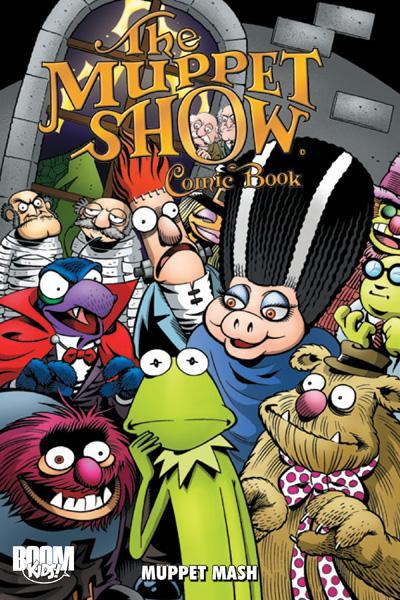
As the cover and the title imply, each issue of this arc features the Muppets and a classic moster trope. Vampires, werewolves, mummies, and robot/Frankenstein monster hybrids. Specific nods to the classic Universal monster movies (like the possible werewolf guest host being Howlin' Jack Talbot, the last name shared with Larry Talbot, the lead character in the classic The Wolfman), are littered throughout, making for nice easter eggs for film buffs. This is my favorite arc, simply because it plays with my love of Muppets and monster movies.

Aside from The Muppet Show Comic Book, Boom! also released a series of minis that took classic stories and recast them with Muppets, in line with films like Muppet Christmas Carol and Muppet Treasure Island. These did not involve Langridge, and varied from series to series in how good they were, but I would definitely recommend Muppet Sherlock Holmes, especially if you are at all familiar with the classic Holmes stories.

The Muppet Show Comic Book is a fun ride, and one that appeals to my nostalgic inner child, my affection for all ages comics, and my love of great comics in general. Whether you're an old school Muppet fan, or someone who only recently found them, I can't think of a better place to get more Muppets. After all, even if it's only on paper, it's time to raise the curtain, it's time to light the lights, it's time to meet the Muppets on the Muppet Show tonight!

All the arcs of The Muppet Show Comic Book were collected in trade by Boom! Studios. These are sadly out of print, although many comic shops will still have them. When Disney comic rights recently went to Marvel, Marvel began reprints of these earlier arcs in magazine form. Meet the Muppets is available in this format, with the others hopefully to follow. This week, Marvel began printing, in normal comic format, The Four Seasons, Langridge's final unpublished Muppet arc. I'm looking forward to reading it and talking about it.