Showing posts with label Uncanny X-Men. Show all posts

Saturday, December 20, 2014

The Matt Signal Advent Calendar 2014 Day 20: Uncanny X-Men #303


Uncanny X-Men 303, August 1993

We’ve seen plenty of superheroes die over the years, from Superman to Batman to Spider-Man to Captain America. Most die heroically, in battle, sacrificing themselves to save their teammates, the whole world or just a loved one.

Illyana Rasputin died like a person: In a medical bed, of an illness, with people who cared about her at her side.

Uncanny X-Men #303 was a powerful issue because it was quiet. There was no supervillain, no deus ex machina, no miracle cure. Most of the X-Men weren’t even in it, a rare feat for a team that size.

Colossus’ sister, who at that point had reverted back to a child, was dying of the Legacy Virus. Charles Xavier and Moira MacTaggert had tried to stabilize her and find a cure, but short of putting her in a vegetative state, there was nothing they could do but accept the inevitable.

Jubilee earns her stripes as a point-of-view character here. It is through her – a character about the same age as the intended audience – that we see the mansion that day, watch the grown-ups try futilely to save Illyana and, ultimately, grieve.

To Jubilee, Illyana, despite being physically younger than her, is a relic of a previous era, and her interactions – her jealousy toward Kitty Pryde and her awkward attempts to play with the Bamf doll patterned after Nightcrawler – spell that out perfectly. A new reader has to be made to care about what’s happening, and so does Jubilee. When she finally comes around – well, I probably got more choked up re-reading it now than I did 20 years ago. 

Wednesday, December 17, 2014

The Matt Signal Advent Calendar 2014 Day 17: Uncanny X-Men #336


Uncanny X-Men #336, September 1996

File this one under crossover issues that stand out more for what they represent than for the stories themselves (See also Spider-Man Unlimited #1, Civil War #1).

Uncanny 336 was a chapter of “Onslaught,” a Marvel mega-event that included the X-Men, Avengers, Fantastic Four and plenty of side books. The hype for Onslaught began building in spring 1995, almost immediately after the end of the previous X-event, the “Age of Apocalypse.”

In fact, according to Brian Cronin’s Comic Book Legends Revealed, what started as a half-formed idea by Scott Lobdell to have someone or something beat up the Juggernaut turned into an edict across the books to allude to Onslaught before anyone knew what it was.

But I don’t remember Onslaught for being a confusing mess that featured a teenage Tony Stark, a younger, long-haired version of Magneto or Hawkeye wearing A Very ’90s Headsock.

What I remember is one panel, about a ninth of the page, showing the left half of Cyclops’ face, fangs bared, saying two words: “Take him.”  Behind him, in shadow, Thor and Storm are airborne, ready to attack the being holding Charles Xavier prisoner and threatening to torture him slowly. Quite frankly, it’s my favorite thing Joe Madureira ever drew.

Here, Cyclops isn’t just leading the X-Men. The Avengers and the FF are following him into battle as well. The X-Man who had spent 30 years suffering from crippling insecurity was now barking orders at almost every major hero in the Marvel Universe. And that’s why I was a teenage Cyclops fan.

Wednesday, November 26, 2014

The Matt Signal Presents The X-Men Present Thanksgiving: Uncanny X-Men #308, Nov. 1993


Thanksgiving is a hard holiday to shoehorn into a superhero story. It’s mostly cooking, eating and burping, which makes it better suited for sitcoms.

Unless, that is, you’ve just come off back-to-back crossovers and you need a breather issue. Which is why Uncanny X-Men #308 is a lesson in perfect timing.


The issue follows an especially rough few months for the X-Men. Illyana Rasputin dies of the Legacy Virus in #303. Magneto crashes her funeral in #304 and invites all comers to live with him and the Acolytes on his new space base, Avalon. Colossus, who’d also recently lost his brother, takes him up on the offer. Then, in X-Men (Vol. 2) #25, the X-Men storm Avalon, and Magneto rips the adamantium out of Wolverine’s skeleton. Wolverine then runs off to lick his wounds in issue 75 of his own book. Finally, the X-Men and the Avengers team up when Magneto’s new lieutenant, Exodus, goes rogue and turns the capitol of Genosha into CBS’ Under the Dome. Also somewhere in there the Phalanx made their first appearance, but meh.

Thanksgiving gave the X-Men the chance to finally get back to what they do best: hang out around the mansion, play sports and have sweet character moments.

Seriously, if you want action, don’t read this issue. The X-Men rake leaves, build a scarecrow, explain football to Bishop and his glorious mullet and eat dinner at the table from The Last Supper. There’s only one Claremont-style interlude foreshadowing the next big villain storyline, and it’s about the Phalanx.

Which isn’t to say that nothing happened. In fact, a very important something happened, as #308 is the issue in which Jean Grey orders Scott Summers to “Marry me.” And because Cyclops is so good at following orders, they were married literally two months later, in X-Men (Vol. 2) #30.


Other things to note:

My original copy has a non-house ad showing Scott and Jean at the altar a full 10 pages before the proposal. Considering the Internet was in its infancy and not everybody had a subscription to Wizard or Previews, that’s one hell of a spoiler.

There are two empty word balloons in the issue, at least in my copy, on opposing pages. There’s one on Page 20, as Xavier is about to be tackled as a result of a wayward football (note: This was not one of those periods when Xavier had the use of his legs). And on Page 21, after Jean says “Marry me,” Scott asks “What did you say,” and she says a white roundish void.

The dinner table includes some notable guests, including Kitty Pryde’s old dance teacher, Stevie Hunter; Trish Tilby, Beast’s news anchor girlfriend from the X-Factor days; and Iceman’s parents, which is shocking because Bobby’s dad is an unabashed mutant-hater, which is a major plot point later in Scott Lobdell’s run.

Check out the Psylocke twins sitting across from each other at the table. Betsy as we’ve known her since 1989 is smiling, while Revanche, who believes herself to be and looks far more like the original Betsy, is not, clearly miffed that the alleged imposter (actually the real deal) has gotten to spend all this time fighting and eating giant turkeys alongside friends and family. Revanche contracts the Legacy Virus but ultimately dies by the sword of Japanese crime lord Matsu’o Tsurayaba. The important thing is she’s dead.

Jubilee appears to have formed a bond with Beast in this issue, jumping into leaf piles together and generally goofing off. It was only a couple months before that Jubes had to say goodbye to her friend and original X-mentor, Wolverine, who had set off on a journey that would see him revisit his roster of villains sans adamantium.

There’s something comforting about John Romita Jr.’s art, all those squared shoulders and jawlines and hatchmarks. Maybe it’s the fact that he was one of the first artists whose work I remember encountering when I got into comics, maybe it’s the fact that he’s the scion of one of the original Marvel pencilers, maybe it’s the fact that he’d been drawing mutants since the ’80s, but whenever I see his art, be it in X-Men or Eternals or Captain America or now Superman, it feels like a warm, fuzzy blanket.

For some of the X-Men’s other great post-event cool-downs, check out:


Uncanny X-Men #138 (1980): Claremont did it first. After the nearly half-a-decade-long Phoenix arc, the X-Men mourn Jean Grey, a grieving Cyclops leaves the team (to find new women to love on), Angel decides to stick around for a while (before leaving for more questionable teams) and a young, wide-eyed Kitty Pryde arrives at the X-mansion to begin her training.


Uncanny X-Men #273 (1990): A too-many-mutants issue. After the X-tinction Agenda, the X-Men, X-Factor and New Mutants all find themselves fighting for the bathroom in the basement of the destroyed X-Mansion. The mutants mingle and argue philosophies with Cable, the guy who showed up out of nowhere and turned the New Mutants into his own personal paramilitary unit. At the end, Lila Cheney shows up and teleports whatever random X-Men she can find off to space to save Professor X.


X-Factor #70 (1991): The beginning of a beautiful friendship between Peter David and Marvel’s second-tier mutants. After the Muir Island Saga, which brought together the X-Men, X-Factor and a bunch of strays, Professor X ponders what to do with them all. (Beast’s response: “Eh, bag ’em.”) Notable for a scene in which Wolverine eats a cigar stub.


Uncanny X-Men #297 (1992): The best of Scott Lobdell’s breather issues. In the wake of the X-Cutioner’s Song, Professor X, who ever-so-briefly can walk again after being nearly assassinated by Stryfe, goes roller-blading with Jubilee. When Xavier’s legs finally give out, the reader’s heart breaks as much as Jubilee’s in that moment. Also: Beast and Archangel rebuild their old teenage haunt.

Uncanny X-Men #318 (1994): The X-Men ship Jubilee off to the Massachusetts Academy with a bunch of other mutants they picked up during the Phalanx Covenant so Lobdell could launch Generation X, aka the Newer Mutants. And Beast drives around new recruit Skin, who proves to be as much of a sad sack on the inside as he is on the outside.


Excalibur #91 (1995): The U.K. X-team heads to the mainland for a pub night following Warren Ellis’ Dream Nails storyline, in which Kitty Pryde and Pete Wisdom uncover government cover-ups and an alien race that killed its own god. Pete and Kitty admit they’re schtupping to the rest of the team, Brian Braddock and Nightcrawler politely but firmly threaten Wisdom, and then Colossus shows up after months in space and beats the crap out of him the next issue.


Dan Grote has been a Matt Signal contributor since 2014 and friends with Matt since there were four Supermen and two Psylockes. His two novels, My Evil Twin and I and Of Robots, God and Government, are available on Amazon.

Monday, April 14, 2014

I Used to Have the Runs: Chuck Austen’s Uncanny X-Men


Here at The Matt Signal, we live by a simple code: If we don’t have anything nice to say about a comic or a particular creator, we don’t say anything at all.

So let’s talk about Chuck Austen.

(Cue record scratch)

Austen is an easy target. Just ask Chris Sims. When you Google Austen’s name, the first thing that pops up is a fan-requested treatise Sims wrote for Comics Alliance in early 2012 on the bizarre trajectory of Austen’s career, from penciling Miracleman for Alan Moore to porn comics to Little Mermaid comics to superhero comics back to porn comics.

To be sure, there’s oh-so-much he got wrong about the X-books. But like it or not, from 2002 to 2005, he put his stamp on Marvel’s mutants.

It should be noted that this was during the X-Men’s hellbent for leather period, when it was decided the team should look more like its counterpart in the movies and Grant Morrison was writing some of the most interesting X-stories since ’80s Claremont in New X-Men. Austen picked up Uncanny X-Men from Joe Casey (and would later pick up the other X-Men from Morrison) and inherited a team that included Nightcrawler, Angel, Iceman, Wolverine and a mutant prostitute who hits on everyone. Over time, he would expand this team to include former X-Factor members Havok and Polaris, reformed baddie Juggernaut, former Alpha Flight member Northstar and former Generation X member Husk. Generally the three main X-books were pretty compartmentalized at this point (though the idea of blue and gold teams had long gone by the wayside), so characters like Cyclops, Jean Grey, Emma Frost, Beast, Storm, Rogue, Gambit and Bishop were all out of play. And Psylocke and Colossus were dead, but they eventually got better.

And, full disclosure, there’s a reason I unloaded my Austen X-books in a garage sale in 2009. I remember reading many an issue saying to myself things like, “This scene where Angel is lovin’ on Husk in the sky over her mom is clearly pushing statutory rape.”; “Wait, Nightcrawler’s dad is the devil, but not like the Mephisto or Belasco devil?”; “Why is this nurse in love with a coma patient?”; and “I have to believe there’s a way to make Polaris an interesting character beyond just making her a jilted, crazy witch.”

But that’s not what we’re here to talk about. Herewith, a shortlist of the things Austen got right, in the X-books and beyond:


He gave Juggernaut a redemption arc: Before Austen, Cain Marko was ne’er not a ne’erdowell. He was a big lug who wore a helmet that made him look like a big, red chode. He liked to run through things and smash them. He hated his step-brother, Professor Charles Xavier. He fought the X-Men, Spider-Man, the Hulk and others. And he once got punched from Canada to Hoboken. But it wasn’t until Juggernaut started forming a friendship with a young mutant named Samuel “Sammy the Squid-boy” Pare that anybody could rightly call Juggs a good guy. Austen made the character someone worth rooting for, to the point where, when the character ends up in bed with She-Hulk in issue 435, you can’t help but smile and say, “Go ahead and enjoy; you’ve earned it.” (Though if you ask Dan Slott, that never happened).

He returned Havok to the X-books: From 1999 to 2001, Alex Summers starred in a book called Mutant X, in which he led a troupe of alternate-reality X-Men that weren’t the Exiles. The book was canceled after 32 issues. Austen brought a comatose Havok back to the 616 almost immediately, albeit in a subplot in which the nurse who’d been tending to him falls in love with him (in her defense, as an X-vegetable, he was the strong, silent type).

He brought Northstar into the X-fold: Alpha Flight is a book that’s really great at being canceled, leaving its characters to be ignored until the next time a creator says, “Hey, I’ve got a pretty decent Alpha Flight idea.” Austen took AF mainstay Northstar and made him an X-Man, giving the team its first openly gay member and laying the groundwork for Marvel’s first highly publicized same-sex wedding about a decade later.


Azazel: Wait, hold on, hear me out. I said Azazel, not “The Draco,” the storyline that introduced him and canceled many a pull subscriptions. Did you see X-Men: First Class? Were you OK with the red demon guy who kinda looked like Taboo from the Black Eyed Peas with evil-Nightcrawler powers. Thank Chuck Austen. Did you think the first arc of Amazing X-Men was the Nightcrawler storyline you’d been waiting for since “Second Coming,” even with Azazel leading a horde of demon pirates? Thank Austen. Without Austen mixing Kurt Wagner up in a bunch of stories about exploding wafers and his never-before-seen demon father (flying in the face of the Cartman’s mom is his dad theory), you wouldn't have writers like Jason Aaron and Chris Claremont giving you make-good Nightcrawler stories today. [Matt's aside: Also have to add, that while looking for an image to go with Azazel, there are a much larger number of disturbing, shirtless, slashy drawings of Azazel in Google image search than I would have expected in my wildest nightmares. Way more.]

He cut the fat from the lesser X-teams: During a storyline involving the Church of Humanity (not to be confused with the Friends of Humanity or the Purifiers, even though it clearly sounds like a sex-baby of the two), the church crucifies a number of unused X-detritus on the front lawn of the Xavier Institute, including Generation X’s Jubilee (who survived), the New Mutants’ Magma (who survived), and X-Force’s Jesse Bedlam and Generation X’s Skin (who did not). Bedlam was introduced to X-Force long after I stopped reading the book, and Skin was basically Mr. Fantastic but worthless, so, to quote Jay Sherman, “And nothing of value was lost!”

He kept the Avengers warm for Brian Michael Bendis: Austen took over Avengers in 2004 from Geoff Johns, who of course went on to fix Hal Jordan for DC and mastermind many of its big stories and characters. During his brief period on the book, he created a new, female Captain Britain codenamed Lionheart. Lionheart hung around just long enough for Bendis to come along and Disassemble the team.


He supports the real heroes: In the early 2000s, Austen wrote a series of The Call of Duty stories for Marvel, starring New York City emergency responders, a fitting tribute to the city’s finest and bravest in the wake of 9/11. Except they fought ghosts, so now all I can picture is Ghostbusters, and I’m sad about Harold Ramis all over again. THANKS A LOT, AUSTEN!


Austen’s run on Uncanny X-Men is available in six volumes of trade paperback. May God have mercy on your soul. 

Wednesday, February 12, 2014

I've Got the Runs: Scott Lobdell's Uncanny X-Men #286-350

When people write about legendary X-Men storytellers, they usually start with Chris “Pappy” Claremont, who took one of Lee and Kirby’s lesser efforts, stripped out what he had no use for and told 16 years of generally brilliant long-form, interweaving arcs.

Then they talk about Grant Morrison, who brought a dark, leather-jacket wearing, indie sensibility to New X-Men, gave Charles Xavier an evil twin, killed Jean Grey (A-gain) and made us care about a guy who looked like a sickly chicken.


But there’s a third guy, in between those two, one who fell into fortune as Marvel saw a mass exodus of talent in the early 1990s and ended up guiding its then-top franchise through most of the decade. And making Colossus miserable.


The story of how Scott Lobdell took over Uncanny is the stuff of legend. In short: He happened to be walking past editor Bob Harras just as Harras needed somebody to finish some X-scripts in 1992. Scripting turned to full-on writing duties at the tail-end of a revolving-door period in which Claremont, Jim Lee, Whilce Portacio and John Byrne all left the X-books.


What follows is six years of crossovers: 1992’s “X-Cutioner’s Song” (Stryfe attacks Xavier, cripples Apocalypse, kidnaps Cyclops and Jean Grey and claims they’re his parents), 1993’s “Fatal Attractions” (Magneto founds Avalon, convinces Colossus to join the Acolytes during his sister’s funeral), 1994’s “Phalanx Covenant” (introduces Generation X), 1995’s “Age of Apocalypse” (creates an alternate reality ruled by En Sabah Nur), 1996’s “Onslaught” (shunts the Avengers and Fantastic Four into a pocket universe) and 1997’s “Operation: Zero Tolerance” (human-sentinel hybrids imprison mutants).


For his grand finale, Uncanny X-Men #350, in which he passed the torch to Steven Seagle, he wrapped a long-developing story tying Gambit to the massacre of the Morlocks.


In between, he created what was intended to be the next wave of mutant heroes in Generation X, a team of largely brand-new characters with the exception of co-headmasters Banshee and Emma Frost and teammate Jubilee. Where are those kids now? Well, Jubilee’s a vampire teen mom, M recently migrated from Peter David’s X-Factor to Brian Wood’s X-(Wo)Men, Synch and Skin are both dead, Chamber was revealed to be a descendant of Apocalypse, Penance was revealed to be two mutants in a coat and Husk went on to have a creepy romance with first-generation X-Man Angel during Uncanny’s gas-leak year.


Crossovers and forgotten characters aside, Lobdell, like Claremont, was a master of the breather issue, those great standalones in which the X-Men would stop whatever it is they were doing to play softball or have Kitty fight demons on Christmas. And it is with that in mind that we present the 10 best issues from Lobdell’s initial run (he came back in the early 2000s to put Colossus out of his misery and cure the Legacy Virus).


297: The post-X-Cutioner’s Song issue. Jubilee bonds with Professor X by taking him rollerblading, as he had temporarily regained the use of his legs, an event that has happened more frequently through the years to the point where it’s no longer special, but at this point it still had some punch, especially during the scene in which, as Xavier’s lower half weakens once again, Jubilee guides him back to his chair. 


303: Illyana Rasputin dies of the Legacy Virus. It’s real sad.


308: The X-Men play football instead of softball. Jean proposes to Scott, and I’m reminded of every joke Chris Sims ever wrote about Cyclops.


309: Xavier does some hardcore flashbackin’, during which we see a young, pre-Acolytes Amelia Voght nurse Charles back to health after he had been crippled. They apparently dated right up until Charles started collecting X-Men like Pokemon, because she thought his “Gotta catch ’em all” attitude would draw unwanted attention to them.


315: Colossus, who defected to the Acolytes after a rough couple months in which his brother turned out to be both alive and a madman and his sister died, plays defense counsel during a kangaroo-court trial of the Neophyte on charges of aiding the enemy. Voght plays prosecutor. Judge Exodus, in charge on account of Magneto's current vegetable status, is swayed just enough by Colossus' complete lack of legal training that he lets the Neophyte off with mere banishment from Avalon.


318: The post-Phalanx Covenant, pre-Generation X issue, in which we learn Skin is as much of a sad, wrinkled sack as he looks, and Xavier ships the team's spunky, youthful heart down to the freshman squad. Also, Beast rocks out to the Stones.


325: Lobdell shows us how much he loves Claremont by having the X-Men play softball AND recreating the old "Storm fights the leader of the Morlocks in the sewers" gag. Also, Colossus returns to the mansion for an issue before heading over to Excalibur to beat up Pete Wisdom.


336: OK, so no one’s trying to defend "Onslaught," but as a recovering Teenage Cyclops Fan, there's a panel in this issue, after Onslaught has taunted the heroes with the imprisoned Charles Xavier inside him, where all you see is half of Scott's face, fangs bared, and a quiet "Take him." At this point, he's not just leading the X-Men into battle, he's commanding members of the Avengers and the Fantastic Four. Joe Madureira might as well have drawn a panel showing Scott’s testicles grow two sizes like the Grinch’s heart on Christmas Day.


340: Iceman started growing around this time, beyond the traditional "Let me show you your true potential" stories that got written every few months. At this point, he and Cannonball had been working undercover inside Graydon Creed's presidential campaign. Bobby got found out, and in retribution, the Friends of Humanity beat the crap out of his dad, who himself was an FOH-level mutant-hater. This leads to a great Bobby-Bastion confrontation later on in Operation: Zero Tolerance.


341: By this point, Cannonball had been an X-Man for about two years, and Lobdell had done a whole bunch o' nothing with him. The X-Men didn't need a Cyclops Jr., so he ended up playing a hayseed rookie as if he weren't leader pro tem of X-Force when Cable was out of town. In this issue, however, he finally gets to shine by wailing on Gladiator.


Dan Grote is the author of OfRobots, God and Government and My Evil Twin and I. He and Matt have been friends since Bane broke the Bat.

Monday, October 8, 2012

Reviews of Comics from Wednesday 10/3


Detective Comics #13
Story: John Layman
Art: Jason Fabok & Andy Clarke

Detective Comics has had a rocky time since the New 52 started. It started out solid, but quickly meandered, with new villains who weren't fleshed out and a love interest who was equally a cipher. I'm happy to report that John Layman's first issue puts the book right on track. The Penguin has gotten quite a bit of use in the past year, but I really enjoyed how he is portrayed here. Penguin's jealousy over being passed over and look on by Gotham as a crook has been a part of his character for years, but Layman puts that front and center. Penguin's plan to make his own name bigger than Bruce Wayne's, and to take out Wayne in the process, and how he plans to keep Batman busy, are clever; this isn't a waddling Burgess Meredith Penguin, but one who would fit in well in the Nolan universe. I also enjoyed Layman's take on Batman. He's clever and is able to think one step ahead of Penguin; the Batman in the book is suited for it, as he is a detective, putting evidence together to beat his foes. He also has levels, thinking about donating to charities that deal with the injuries he inflicts on he enemies and caring about his mother's memories. The backup features focuses on Ogilvy, Penguin's new right hand man, going on the caper that facilitates Penguin's plot in the main story with a new hire. It's a little crime story, abut what it's like to be a rank and file crook in Gotham; the flipside to Gotham Central. Jason Fabok's art has improved leaps and bounds from the first time I saw his work on the first volume of Batman: The Dark Knight; he's developing his own style separate from David Finch, who his early work strongly resembled.


Legends of the Dark Knight #1
Story: various
Art: various

The original Legends of the Dark Knight series was the first series I collected starting with the first issue, and so I have a soft spot for the series, and was curious to see what this new anthology of digital first stories would bring. The first issue had three stories, each of which was an excellent Batman short. The standout was "The Butler Did It," from Lost creator Damon Lindelof and Jeff Lemire, who I have encountered mostly as a writer. A story of Batman's early years, it presents a cocky young Bruce being put into his place by Alfred. It's a dark little story, but one that ends reminding us of the bond between Bruce and Alfred, and that everything Alfred does in the end is for Bruce's good. "All of the Above" is a Batman versus Amazo story on the JLA watchtower. It's one of those stories that shows that Bruce's mind is his greatest weapon, one that could allow him to stop any of the more traditionally powerful members, and its J.G. Jones art is stunning. The final piece, "The Crime Never Committed," comes from Star Wars scribe Tom Taylor and Secret Six & Earth 2 penciller Nicola Scott. The story of Batman preventing a desperate man from committing a crime is tight and clever, another good story of Batman as detective. I love a good short comic story, and I hope each issue can provide just as many good shorts.


Muppets #4
Story & Art: Roger Langridge

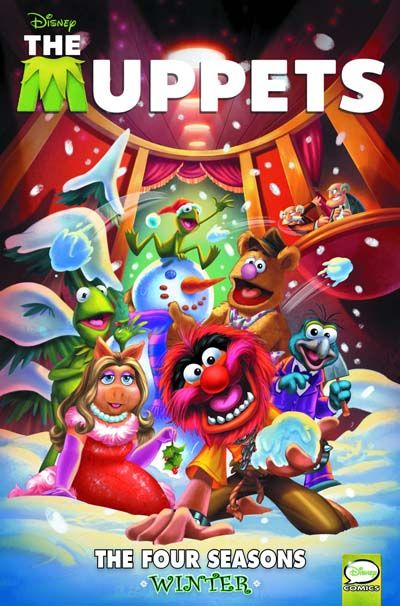
And this is it: the final Muppets story from Roger Langridge. The issue is the perfect coda to everything Langridge has done with the Muppets, mixing classic bits with the warm heart that he puts into his work and fits so beautifully with the Muppets. It's Christmas at the Muppets Theater, and Miss Piggy wants a kiss and a ring from Kermit, and is trying to find him the best Christmas present possible. Gonzo's latest stunt has destroyed the Theater's new fridge. And a wild Christmas Pudding is on the loose. Mix that in with a Pigs in Space and a Swedish Chef, and you get some perfect Muppet chaos. I am going to miss Langridge in these characters, and with the end of Snarked as well, I just have to keep my ear to the ground for whatever is next from him. I know I won't be disappointed.


Uncanny X-Men #19
Story: Kieron Gillen 
Art: Dale Eaglesham

In the same week we get the end of Avengers Vs. X-Men, an issue I had a lot of problems with, we get this gem, "The Passion of Scott Summers." The issue is a travel through Scott's mind, covering the same period of time as the last two issues of Avengers Vs. X-Men. it's chilling to watch Scott fight with the Phoenix Force, to try his best to stay master of it, and fail so utterly. Memories of his life, of the times the Phoenix has effected him, dance through his mind as he fights the assembled Avengers and X-Men. He's not a completely mad monster, but a man who was trying to do what he truly believed was best and has been corrupted by something outside himself; the road to Scott's hell has been paved with good intentions. In the end it is his contact with the Phoenix Force, and with apparently Jean Grey's spirit, plus his own pain, that stops him long enough for Hope to finally put a stop to all this. In the end, when he finds out that new mutants are being born, he feels like he has done what was right, that the ends have justified the means. That is not to say he does not have regrets; the look of pain on his face as he realizes he has killed Charles Xavier is poignant. But he has done what he has set out to do, and he will take responsibility for the end results. Dale Eaglesham does a tremendous job mixing the chaos of the Phoenix battle with Scott's more pleasant memories. The final scene, between Scott and the Beast is written beautifully, but Eaglesham puts the right touches to it to really make it pop off the page. My final note on this issue, and the whole event, is something I'm borrowing from Comics Alliance. I hope someone makes these shirts, because I'll be first in line to buy them.


Monday, June 25, 2012

Reviews of Comics from Wednesday 6/20


Daredevil #14
Story: Mark Waid
Art: Chris Samnee

Daredevil has quietly become the best comic that Marvel publishes. I had decided to drop the title at the end of Shadowland, since there are only so many times you can watch Matt Murdock's life be destroyed. But when Waid's new number one came out, I decided to give it a shot, and was shocked at the sheer joy that radiated off every page. The current story involves Matt being imprisoned in Latveria, home country of Dr. Doom, as a criminal for having gotten in the middle of a scheme to use Latveria to launder money for all the megacrime families. Waid puts Matt through his paces, being chased through the country by Doom's guards while his senses are failing him. Waid and his various artistic collaborators have created a very interesting visual for Matt's radar sense and his powers, and Chris Samnee, the newest addition to the rotating cast of artists, has picked up the ball and run with it, and having to play with it while Matt's senses are fading made it an even more interesting artistic experiment. Waid not only writes a Matt Murdock who seems better adjusted than he has since probably before Frank Miller's turn on the book, but he writes a great Foggy Nelson, and seeing the brief interlude with Foggy sets things up for when (if?) Matt returns to America.  The cliffhanger is beautifully done, a great synthesis of art and words, and I can't wait to see what happens next, which is exactly how a good comic cliffhanger should work.


Red Hood and the Outlaws #10
Story: Scott Lobdell
Art: Kenneth Rocafort

Red Hood and the Outlaws was one of the books that raised a lot of eyebrows when it launched out of the New 52, and not in the best way, particularly in the characterization of Starfire. But over the course of the series, Starfire's personality has reverted to something much more similar to what it was when she was first introduced by Marv Wolfman: a warrior woman with a sensitive streak. In this issue, we see Starfire at her best, summoned back to Tamaran and commanding her ship, the Starfire, which I assume to be the namesake of her Earth identity and not her naming the ship after herself. This is Kori at her best: tough, compassionate, and take charge. She isn't the vapid bimbo that people were assuming Lobdell was making her out to be at the beginning of the series. And hey, she's wearing head-to-toe armor! I also enjoyed Jason Todd, Red Hood, out on a date and attempting to not let on that he's actually an international man of mystery. That goes about as well as you might expect. The New 52 Jason has grown on me, being far less insane than his previous incarnation, but still a broken individual. This is one of the New 52 titles that has improved greatly from its first issue, and I'm hoping to see it continue to be the solid action comic that it has become.


Reed Gunther #10
Story: Shane Houghton
Art: Chris Houghton

Reed Gunther is cowboy. A cowboy who rides a bear named Sterling and hangs out with Starla, the toughest cowgirl you ever met. If that setup doesn't pique, I don't know what will. Reed Gunther is one of the recent additions to the Image stable that I have enjoyed tremendously because it's fun. Plain, crazy fun in the same way Atomic Robo is: a comic for all ages that doesn't talk down to any of its readers. Reed, Sterling, and Starla meet and fight monsters of different sorts each issue, getting into all sorts of trouble, often brought on by Reed's habit of not thinking before he acts or speaks. This is, sadly, the final issue of Reed Gunther for the near future, and wraps up many fo the plot threads that have run through the ten issues. It's an action packed issue, with Reed's friends trying to again save him from a bad decision, but in this case one brought on be Reed trying to save a friend. The bond of friendship that this issue tests between Reed and Sterling, and now Starla, is the central theme of the series, and Reed and Sterling are the best combo in comics this side of Booster Gold and Blue Beetle. It's got high stakes without being bloody or morose, and has great character beats without beating the reader over the head with them. And what other comic ends its villain with a tickle fight? Brothers Shane and Chris Houghton have created a great book with Reed Gunther, and I can only hope we get more of it soon.


Star Wars: Dawn of the Jedi - Force Storm #5
Story: John Ostrander
Art: Jan Duursema

This issue marks the final part of the inaugural arc of Dawn of the Jedi, the story of the early days of the Jedi order by Star Wars super-team John Ostrander and Jan Duursema, and it works beautifully to set up what is to come for the series. Ostrander has introduced a large cast, but done it with a master's hand, giving each distinct personalities and motivations, and Duursema has given each looks that reflect their personas. Her art shines in this issue, during both the Force Storm and battle between the Jedi Journeymen and Masters against the monstrous Saarl, and during the aftermath of the battle in a much quieter way. Ostrander is an expert world builder (I will not hide my feeling that Ostrander is one of the great writers of the past thirty years of comics, and don't be surprised if you see a series of posts featuring his work on here in the not too distant future), and I love the various ideas that he has created for this series: The Jee'dai Order that has not become what we're used to seeing, an order attempting to maintain balance between light and dark instead of just embracing the light. Everyone knows how this story is going to end, with the birth of the Jedi and Sith Orders from the Jee'dai, but the fun is going to be seeing how, and the last, ominous page here seems to set those events in motion. But only time will tell.


Uncanny X-Men #14
Story: Kieron Gillen
Art: Dustin Weaver

Kieron Gillen's run on Uncanny X-Men has been the best in years, mixing superhero action with crazy science in a way similar to, but distinct from, the way Jonathan Hickman has done in Fantastic Four. This issue is an interlude in the middle of his Avengers Vs. X-Men tie-in arc, focusing entirely on Mr. Sinister, my personal favorite X-Villain of all time. When last we saw Sinister, he had created a race of perfect clones of himself, giving birth to a new race. This issue we find out where Sinister took his race when he disappeared, and what exactly he has been up to. It's a unique concept, the supervillain as a meme and system, literally a thought that crafts a race, and this issue follows one of the Sinister clones who believes that the leader, the current Alpha Sinister for want of a better term, needs to be eliminate him. I don't want to give anything more away in that, as the book features all sorts of twists and turns, and an ending that is both perfectly comic book and utterly creepy. Dustin Weaver is an artist whose work I first encountered during his run on Star Wars: Knights of the Old Republic, and his art has grown leaps and bounds over time. His art here is lush and detailed, beautifully displaying the faux-Victorian look of Sinister's new homebase, and working in excellent touches to all of the similarly period costumes. As I think about it, I would love to see him draw a Victorian-Off between Sinister and The Shade. I know it will never happen, but a guy can dream, can't he?